You don’t need a lab, a budget or a research team to find out whether your product works. Five people, a prototype and an afternoon will show you most of the big problems. This is the method we use, simplified so anyone can run it.
Why five?
In 2000, Jakob Nielsen showed that testing with five users finds most of the usability problems in a design; after that, each extra person mostly shows you the same problems again. The point isn’t that five is magic. It’s that several small rounds (test, fix, test again) teach you far more than one big one.
Two caveats: five people per distinct group (if you have buyers and sellers, test five of each), and five finds problems, not percentages. If you need to say “68% prefer A”, that’s a survey or an A/B test, not this.
1. Decide what you want to learn
Write down two or three questions, such as “Can people sign up without help?” or “Do they understand what the price includes?” Everything else in the session serves those questions.
2. Find the right five people
Recruit people who match your real users, not your colleagues, friends or anyone who’s seen the product. Existing customers, a post in a relevant community, or a recruitment service all work. Offer a thank-you: a voucher is normal. Book 45 minutes each, with gaps between, and expect one no-show.
3. Prepare something to test
A clickable prototype is ideal, but a live site, a competitor’s site or even paper sketches work. Testing early, before anything is built, is when changes are cheapest.
4. Write tasks, not questions
A task is a realistic goal, written without the words on your buttons:
- Good: “You’ve just moved house. Update your address so your next order goes to the right place.”
- Not so good: “Click Account, then Edit address.”
Write four to six tasks, from easy to harder.
5. Run the session
- Set people at ease. “We’re testing the design, not you. You can’t get anything wrong, and honest reactions help most.”
- Ask them to think aloud. “Tell me what you’re looking at, and what you’re thinking, as you go.”
- Then mostly stay quiet. The hardest part. When they get stuck, don’t help. Ask “What would you do now?” or “What are you looking for?” If they’re truly stuck, move to the next task.
- Watch what they do, not what they say. People will struggle for two minutes and then say it was easy. The struggle is the finding.
- Record it, with permission, so you can share clips. A short clip of a real person stuck changes minds faster than any report.
Online sessions over video work well and make recruiting easier. Ask people to share their screen.
6. Make sense of it the same day
Straight after the last session, while it’s fresh:
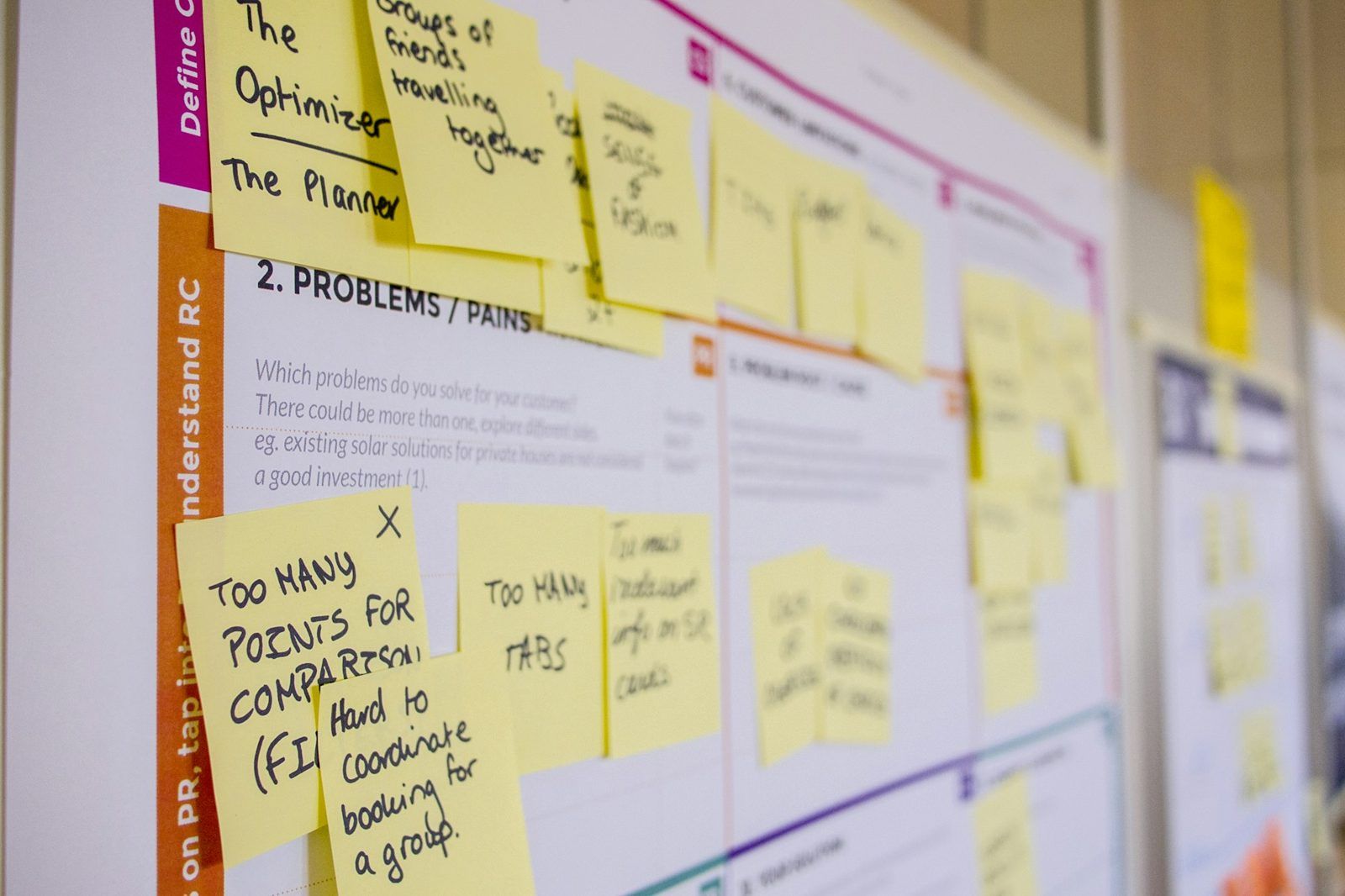
- List every problem you saw, one per sticky note or row.
- Note how many of the five hit each one.
- Rate how bad it was: stopped them, slowed them, or annoyed them.
- Pick the few that matter most and decide what to change.
Problems that stopped three or more people come first. Don’t fix everything; fix what matters and test again.
7. Test again
Change the design and run another small round with five new people. Each round is cheaper than the last, because you know what you’re looking for. Three rounds over a few weeks will transform most products.
Common mistakes
- Testing with people who already know the product.
- Leading questions: “Did you find that easy?” invites a yes.
- Helping as soon as someone hesitates.
- Writing a long report nobody reads, instead of a short list of changes.
- Testing once, at the end, when it’s too late to change much.
Want help running your first round, or a Prototype Sprint that ends with testing built in? Get in touch.
← Back to all insights